Ask most people to picture renewable energy and they'll show you the same images: a field of solar panels, a row of wind turbines on a ridgeline, perhaps waves rolling into a coastal generator. All real, all important, and all part of the Philippines' energy future.
But that picture is missing something — and the gap matters more than most people realise. Renewable energy is not only about generating electricity. It's also about harvesting heat that's already free and all around us. And the machine that does that is the heat pump.
Ambient air is a fuel — a free, renewable one
Here's the idea that reframes everything. The air around your building, even on a cool morning, is full of low-grade heat. It's energy that arrived from the sun, and it's sitting there, free, every hour of every day. A heat pump's job is to gather that ambient heat, concentrate it, and deliver it at a useful temperature — for hot water, for process heating, for drying, for preheating a boiler.
It does this so efficiently that for every one unit of electricity it draws, it delivers around four to five units of heat. The other three or four units come from the air itself. That harvested portion — the heat pulled out of the ambient environment — is, by every sensible definition, renewable energy. It's solar energy, stored in the air, collected without a single panel.
The EU already counts this as renewable energy. Under the Renewable Energy Directive, the ambient heat captured by an efficient heat pump counts toward renewable-energy targets. The condition is efficiency, not the electricity source — so the harvested heat is renewable even on grid power. Run the heat pump on solar, and the whole machine is renewable: the harvested air and the electricity both.
The Philippines is only beginning to have that conversation. But the physics doesn't wait for the paperwork — the energy is renewable whether or not the category has caught up.
Why this matters for the Philippines right now
The country is rightly investing in large-scale generation: offshore wind, utility solar, the long build-out of a cleaner grid. Those projects are measured in gigawatts and in years. They are how the nation's power supply gets greener over the coming decade.
But there's a second, faster front in the same effort — and it runs through the boiler rooms and plant rooms of ordinary Filipino businesses. In a typical food processor, hotel, hospital or factory, the biggest energy loads aren't lights and machines — they're thermal: hot water, steam and process heat on one side, air-conditioning and refrigeration on the other. Together that's around two-thirds of the energy bill. And almost all of the heating, today, comes from burning diesel, LPG or inefficient electric elements.
One machine, both directions. A reversible heat pump heats and cools — hot water and process heat when you need warmth, chilled water and refrigeration when you need cooling — all by moving ambient heat rather than burning fuel to make it.
Replace that flame with a high-temperature heat pump running on natural refrigerants, and you've decarbonised the largest part of that site's energy use — using ambient air as the fuel. No new transmission line. No auction. No environmental impact assessment that takes years to clear. Just a machine, installed behind the meter, quietly harvesting free renewable heat.
Renewable energy you can install in days
This is the part that separates heat pumps from every other renewable technology: speed.
A wind farm or a solar plant is a construction project — permits, land, grid connection, financing close, all before the first kilowatt flows. A high-temperature heat pump replacing your boiler's hardest work is, in most cases, a straightforward equipment installation. From decision to commissioning is typically weeks, not years. And because it sits on your side of the meter serving your own loads, it starts reducing your bill immediately — a renewable system that installs in days and starts working for you on your next electricity bill.
Natural refrigerants: renewable and future-proof
There's one more piece that makes this genuinely sustainable rather than just efficient. The heat pump has to move that ambient heat using a refrigerant — and the refrigerant matters enormously.
Most heat pumps on the market use synthetic refrigerants (HFCs) with high global-warming potential, and they're facing a tightening regulatory phase-down. Build your renewable-heat strategy on those and you've bought a problem with a deadline.
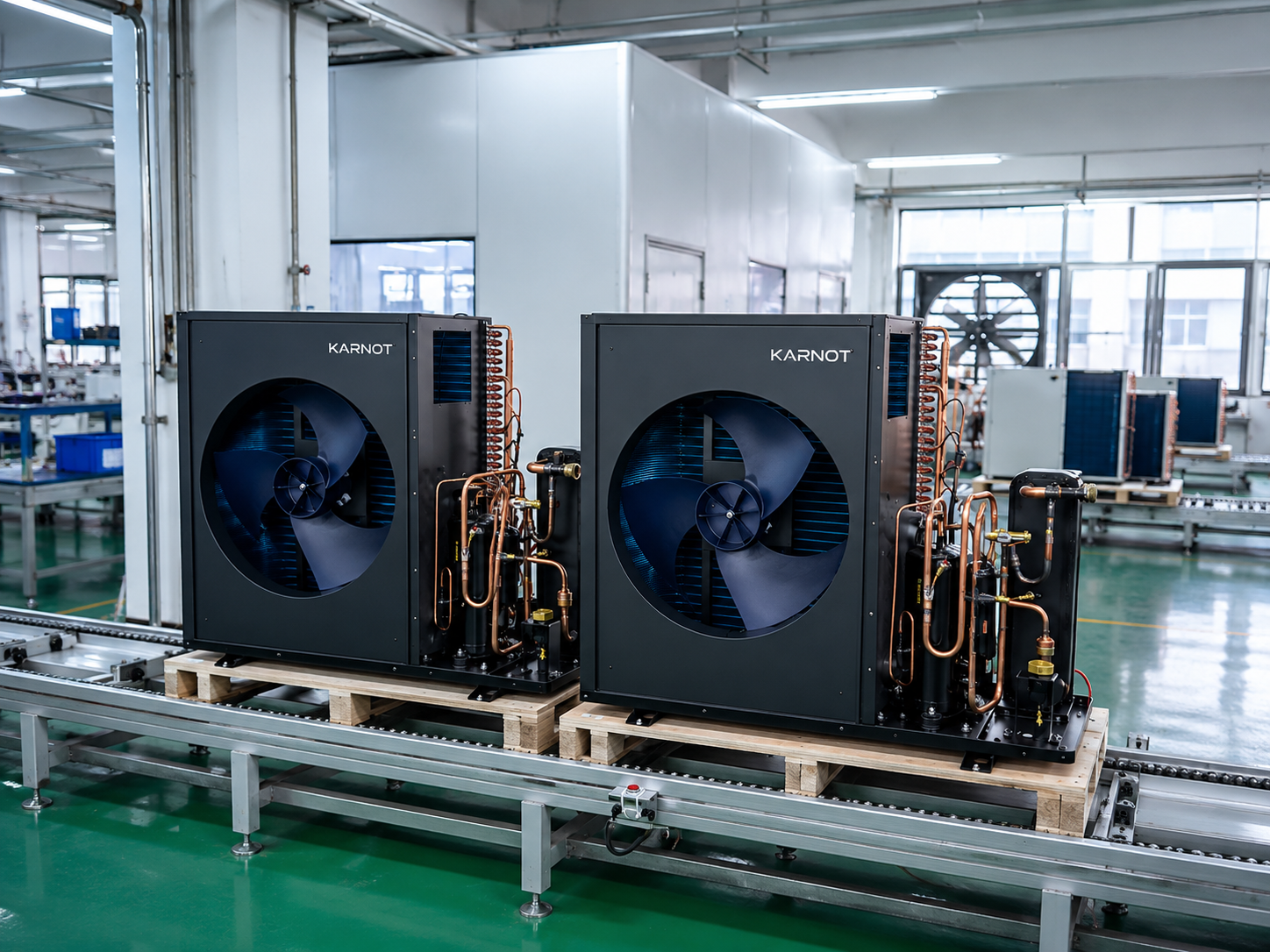
The alternative is natural refrigerants — propane (R290) and CO₂ (R744) — with negligible global-warming potential and no phase-down hanging over them. They're what allow a heat pump to reach genuinely high temperatures for industrial work, cleanly, and stay cheap to run and legal a decade from now. That's the technology in the photo above: high-temperature, natural-refrigerant heat pumps, manufactured to international standards and designed for tropical conditions.
The whole picture
So here's the fuller image of the Philippines' renewable future. Yes, offshore wind. Yes, solar arriving by the thousands of megawatts. And alongside them, in every plant room across the country, heat pumps quietly harvesting renewable heat from the air — installed in days, saving from the first bill, decarbonising the heat that the big projects were never designed to touch.
The grid will get greener over the next ten years. Your own energy use can get greener this month. Both are renewable energy. Both are building the same future. That's what we're here to do: helping build the Philippines' renewable future.
Who's telling you this
Karnot Energy Solutions Inc. is a Philippine company building natural-refrigerant heat pumps — AquaHERO for homes and iHEAT for businesses — engineered for this climate and serving the Philippines, the UK, the US and Canada. High-temperature, natural-refrigerant heat pumps are mature, proven technology, manufactured to international standards. BOI-SIPP registration in process.