Hot water that moves, not burns.
Every electric water heater — the shower on your wall or the boiler in your plant room — runs at COP 1.0: one unit of electricity, one unit of heat. That is the hard ceiling of resistance heating. A Karnot heat pump doesn't make heat — it moves it out of the 28–35 °C Philippine air. One unit of electricity in, four units of heat out. Same hot water, a quarter of the bill.
Resistance heating has a ceiling. A heat pump doesn't.
It doesn't matter whether you are heating four bathrooms or a 2,000-litre plant-room tank. The physics is the same — and so is the fix.
One unit in, one unit out — that's the best an electric heater can ever do
A wall-mounted electric instant shower is a 3.5–6 kW resistance heater; a commercial electric boiler is the same idea at scale. Both convert electricity to heat at COP 1.0 — the hard physical limit. A Karnot heat pump pulls heat from the 28–35 °C Philippine air and delivers it to the tank at COP 4.0–4.5. Same litres at the tap, roughly a quarter of the electricity. The reason there are still electric heaters everywhere is not that they work well — it's that nobody made you do the maths.
The 10 °C Legionella penalty most heat pumps hide
WHO guidance and ASHRAE 188 require 60–65 °C stored water to control Legionella. Most legacy heat pumps top out at 55 °C, so they burn the last 10 °C on a resistance element at COP ~0.95 — and the spec-sheet COP of 3.5 quietly collapses to 2.1 in the cupboard. Karnot AquaHERO and iHEAT R290 deliver 65–70 °C natively from the heat pump. The backup element is cold-snap insurance, not a hidden top-up to plug a temperature gap your spec sheet forgot to mention.
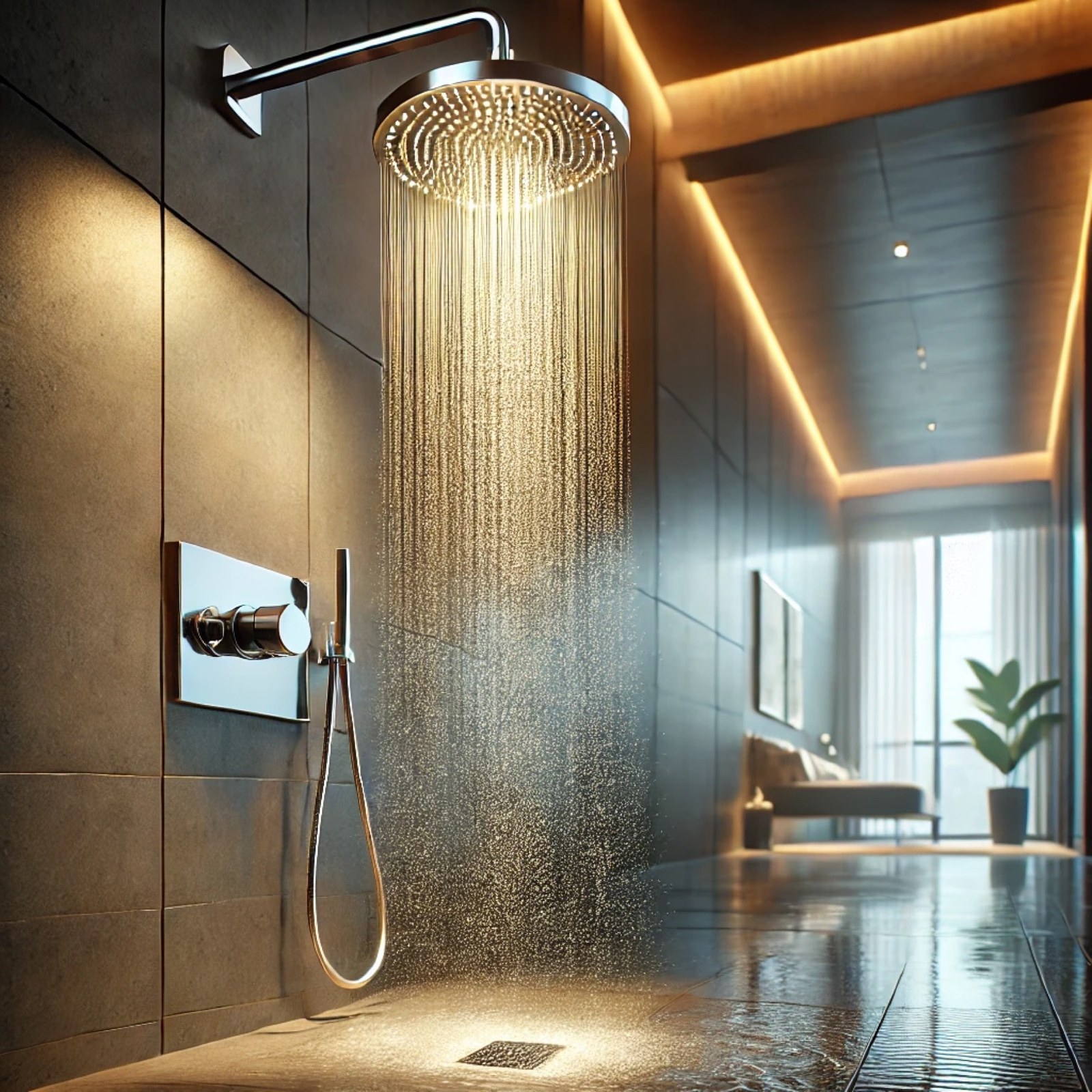
Stop paying to make heat in three bathrooms. Pay a quarter as much to move it once.
A typical Philippine condo, villa, guest house or clinic runs three or four wall-mounted electric showers, one per bathroom — roughly ₱70,000 to buy, and again every 5–7 years when the elements scale and the safety cut-outs fail. One central AquaHERO 200L or 300L replaces all of them — on the same plumbing, on a single 13 A plug.
The honest payback isn't the headline 3.9 years against a zero baseline. It's 1.5 years. You were going to spend ₱70K on electric showers anyway. The extra you spend to fit AquaHERO is about ₱82,000 — and that pays back in eighteen months on the running cost alone. Everything after that is hot water at a quarter of the bill for another thirteen-and-a-half years. One tank instead of four. Real sanitary 65 °C at every tap — not the lukewarm dribble during the simultaneous-shower spike.
AquaHERO 200L
The condo / villa / 1–2 bathroom answer. Replaces 2–3 electric showers with one central tank. Ø570×1810 mm, ~100 kg, standard 13 A plug — the same socket the showers were on.
AquaHERO 300L
The guest-house / B&B / small clinic / salon answer. One tank replaces 3–4 per-bathroom electric showers. ~50 L/hour continuous, ~360 L/day duty. 65 °C from the heat pump — no resistance top-up to hit Legionella temperature.
Karnot scope
We deliver the unit, factory-tested and commissioned on site by a Karnot engineer, with operator training and the O&M pack. You provide the electrical feed, plumbing and condensate drain. 18-month parts warranty; the sealed R290 charge keeps refrigerant compliance our problem, not yours.
Solar + SG-Ready
Every AquaHERO ships SG-Ready today. Add rooftop iVOLT PV whenever you're ready and the unit charges the tank on free midday solar — another 30–50% off the electric bill with no controller upgrade.
One verified home. The maths nobody made you do.
A verified Karnot quote for a Philippine guest house running 360 L/day at 60 °C — four per-bathroom electric showers replaced by one AquaHERO 300L.
| Verified guest house · 360 L/day @ 60 °C | Before · 4 electric showers | After · AquaHERO 300L | Delta |
|---|---|---|---|
| Kit CAPEX (the spend you make anyway) | ~₱70,000 · 4 wall units | ₱151,594 VAT-inc | +₱82K incremental |
| Annual running cost | ~₱80,000/yr · COP 1.0 | ~₱27,000/yr · COP 3.48 | −₱53,022/yr |
| Peak draw at the meter | Up to 15 kW concurrent | 2.4 kW continuous | No shower spike |
| 15-year total cost of ownership | ~₱1.34M (1× replacement) | ~₱557K | −₱783K / 15 yr |
| Incremental payback · the real number | — | 1.5 years | on the ₱82K extra |
8-month payback. ₱627K a year saved. Free cooling on top.
For hotels, hospitals, food processing, large laundries and industrial kitchens, an iHEAT R290 cascade replaces the electric or fossil boiler feeding your hot water. At a verified Philippine install the previous electric-boiler bill of ~₱506K/year collapsed to ~₱22K/year for the same 1,950 L/day duty — a 95.5% cut, because COP 4.5 in 30–33 °C ambient does what physics says it should.
Then it gets better. A heat pump making hot water has two outputs: hot water on one side, cold air on the other. The iHEAT evaporator rejects ~83 kW/day of cold air — duct it into your fresh-air handler or cold store and it offsets ~₱143K/year of split-AC electricity. European engineers throw that cold air away. In Manila it's worth as much as the hot water. One machine, two outputs, from the same kilowatt-hour.
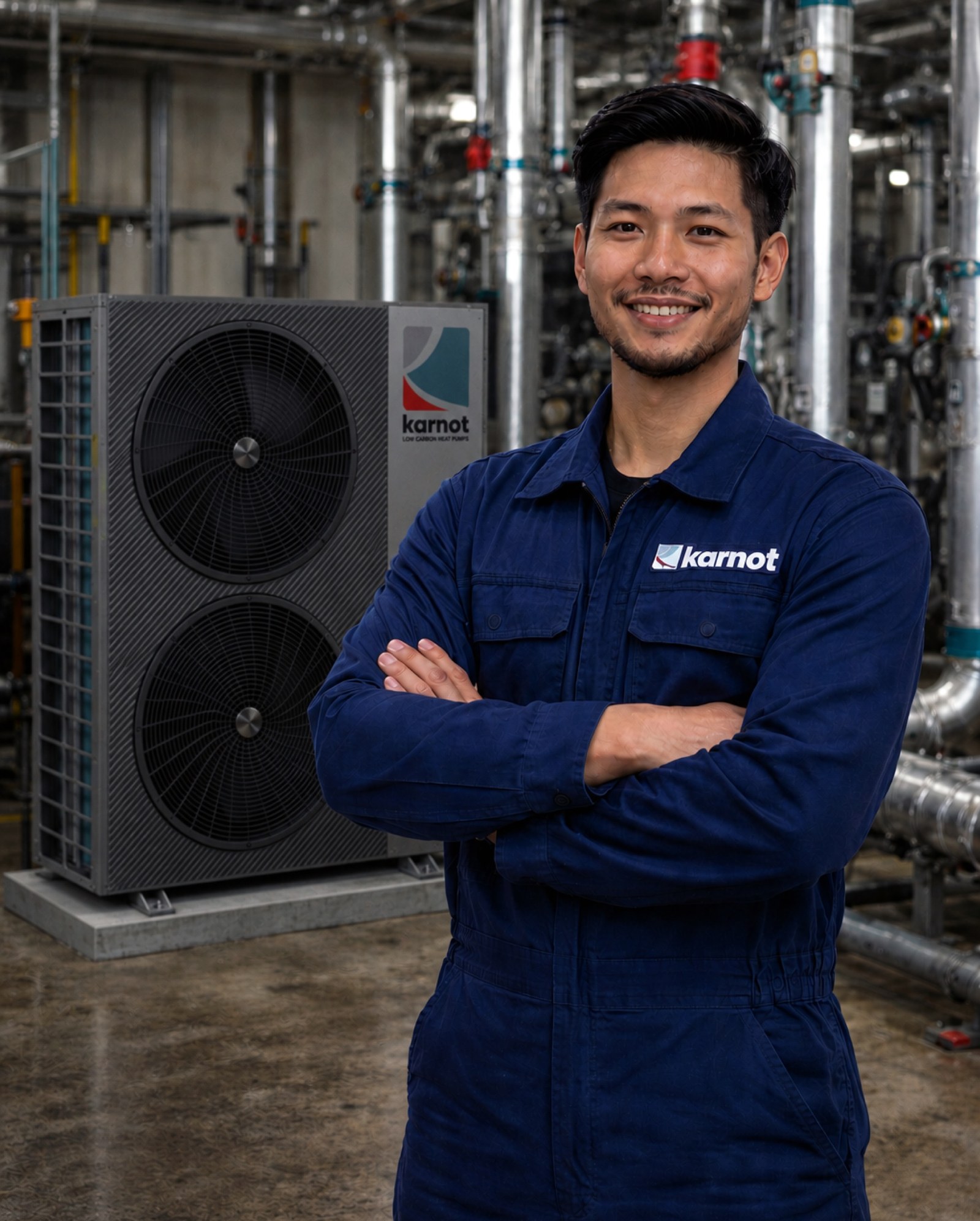
iHEAT R290 cascade
Central hot water for hotels, hospitals, food processing and laundries. Replaces electric, LPG and diesel boilers. Cascades to 600 kW on one R290 circuit. COP 4.5 achieved at the verified install in PH ambient.
Free-cooling recovery
Every kWh of hot water throws off ~0.75 kWh of usable cold air. We duct the evaporator side into your FAHU, cold store or pre-cool coil. Worth ~₱143K/yr at the verified install — cooling you were paying for separately, now free.
iSTOR + iVOLT
Industrial hot water is 24/7 — ideal for solar pre-investment. iVOLT PV + iSTOR thermal storage charge the tank on midday solar; the cascade rides the evening peak from stored heat. Another 30–50% off the bill.
Permits & M&V
Karnot files the DENR / LGU outdoor R290 permit pack, installs, commissions and trains your team. 3-year warranty on heat-pump cores, 24/7 cloud monitoring, and monthly M&V reporting cost-per-litre + free-cooling-kWh recovered.
One verified plant room. 95% off the bill, plus free cooling.
A verified Karnot install at a Philippine aircraft-maintenance facility — 1,950 L/day at 28→65 °C, electric boiler replaced by an iHEAT R290 cascade.
| Verified facility · 1,950 L/day | Before · electric boiler | After · iHEAT R290 | Annual saving |
|---|---|---|---|
| Hot-water annual cost | ₱506,183 | ₱22,645 · COP 4.5 | −₱483,538/yr |
| Free cooling recovered (evaporator) | — (thrown away) | 83 kW/day to the FAHU | +₱143,452/yr |
| Refrigerant / combustion footprint | Scope 2 grid · ~204 tCO₂e/yr | R290 · GWP 3 · no PFAS | −77% Scope 2 |
| CAPEX · payback · total saved | (legacy paid) | ~₱420K installed | 8 mo · ₱627K/yr |
The commercial CAPEX? The bank does the heavy lifting.
An iHEAT hot-water cascade is exactly the kind of energy-efficiency project three Philippine banks are funded to finance — and at an 8-month payback the saving covers the loan payment many times over. For homes, the “loan” is simpler still: it's the ₱70K you were already going to spend on electric showers.
Plus BOI Pioneer Income Tax Holiday under RA 11285 for qualifying commercial installs. Karnot files the loan application, the BOI registration, the DENR/LGU R290 permit pack and the monthly M&V report your lender wants to see as part of project scope.
Download the Hot Water Application Briefs
Two print-ready briefs — the residential AquaHERO story for homeowners and small operators, and the commercial iHEAT story for hotels, hospitals and industry.
Residential & Small Commercial
AquaHERO 200L / 300L. The electric-shower replacement story, the 1.5-year incremental payback, the verified guest-house numbers, the Legionella and solar angles.
Commercial, Hospitality & Industrial
iHEAT R290 cascade. The electric-boiler collapse, the free-cooling bonus, the verified 8-month payback, and the hot-and-cold engineering for hotels, hospitals and food processing.
Frequently Asked Questions
Why is an electric shower or electric boiler so expensive to run?
Resistance heating has a hard physical ceiling: one unit of electricity in, one unit of heat out — COP 1.0. A wall-mounted electric instant shower is a 3.5–6 kW resistance heater; a commercial electric boiler is the same idea at scale. A Karnot heat pump doesn't make heat at all — it moves heat out of the 28–35 °C Philippine air into your tank. One unit of electricity in, roughly four units of heat out (COP 4.0–4.5). That is why the same hot water costs about a quarter as much.
How much can a Philippine home or guest house save with AquaHERO?
A measured Philippine guest house running 360 L/day at 60 °C replaced four per-bathroom electric showers with one AquaHERO 288 L — ~₱53,000/year saved, payback under four years. The honest number is the incremental payback: the four electric showers cost ~₱70,000 to buy (and again every 5–7 years when the elements fail), so the extra you spend on the AquaHERO over the showers pays back faster still. The AquaHERO is quoted to your usage — send a photo of your bill for a firm installed price within a day.
How much can a hotel, hospital or factory save with iHEAT?
A verified Karnot install at a Philippine aircraft-maintenance facility (May 2026) replaced the electric boiler feeding 1,950 L/day. The bill fell from ~₱506,000/year to ~₱22,600/year — a 95.5% cut at COP 4.5. The evaporator's ~83 kW/day of cold air, ducted into the air handler, offset ~₱143,000/year of split-AC electricity. Total saving ~₱627,000/year, payback 8 months.
What is the free cooling bonus on a commercial heat pump?
A heat pump making hot water has two outputs: hot water on the condenser side and cold air on the evaporator side. For every 1 kW of heat delivered, an iHEAT cascade rejects ~0.75 kW of usable cold air. European systems treat it as waste; in the Philippines it's worth as much as the hot water. Karnot ducts it into your fresh-air handler, cold store or pre-cool coil — worth ~₱143,000/year at the verified install. One machine, two outputs, same kilowatt-hour.
Can a heat pump reach a safe 60–65 °C for Legionella control?
Yes — and it matters. WHO guidance and ASHRAE 188 require 60–65 °C. Most legacy heat pumps top out at 55 °C and burn the last 10 °C on a resistance element at COP ~0.95, collapsing the real-world efficiency. Karnot AquaHERO and iHEAT R290 deliver 65–70 °C natively from the heat pump, with the electric element reserved as cold-snap insurance only.
Which AquaHERO size do I need?
AquaHERO 200L (2.2 kW, COP 4.0, 70 °C) is the condo / villa / 1–2 bathroom answer — replaces 2–3 electric showers. AquaHERO 300L (2.4 kW, COP 3.48, 65 °C native) is the guest-house / B&B / clinic / salon answer — one tank replaces 3–4 showers, ~50 L/hour, ~360 L/day. Both run on a standard 13 A plug. Above ~600 L/day you step up to a commercial iHEAT unit.
What does Karnot supply, and what do I provide?
Karnot supplies the unit, factory testing, on-site commissioning by a Karnot engineer, operator training and the O&M manual. You (or your contractor) provide the electrical feed, cold-water supply and hot-water piping, condensate drainage and minor civil works. Turnkey install is available, quoted per site. The sealed R290 charge keeps refrigerant compliance with Karnot. Residential: 18-month parts warranty; commercial: 3-year core warranty with optional 24/7 M&V.
Is it solar-ready?
Every Karnot hot-water unit ships SG-Ready (Smart-Grid-Ready) as standard. Add rooftop iVOLT solar whenever you're ready and the unit shifts heating to the cheapest hour, charging the tank on free midday solar and riding the evening peak from stored heat — another 30–50% off the bill, no controller upgrade. Hot water is the ideal solar load because the tank stores energy as heat, cheaper than a battery.
Count the electric heaters. Email us the number.
Tell us how many bathrooms and the kW rating on each shower (residential), or your boiler capacity and 12 months of bills (commercial). We size the AquaHERO or iHEAT, run the maths against your power bill, and send back the unit price, the projected saving and the payback — like the verified cases above. No commitment, no sales call until you ask.
Two tanks in series: how a store keeps the heat pump efficient
Two tanks piped in series, not side by side. Hot water leaves the heat pump along the top to the taps, with a tee into the top of tank 1. The bottom of tank 1 feeds the top of tank 2. The bottom of tank 2 — the coldest water in the building — is what goes back to the heat pump.
- Cold side outdoor air, 30 °C
- Hot side Cold water in 30 °C → Hot water out 75 °C
- Machine Karnot iHEAT R290 (air-source)
Why it works: This is why R290 and a store work so well together. A heat pump is only asked for a big step when the water coming back is already warm. Keeping the tanks in series means the machine always draws the coldest water in the system, so the step stays small, the COP stays high and the store still holds a full tank at 75 °C for the morning rush. Mix the tanks in parallel and you warm the return, shrink the saving and lose the top temperature.
Temperatures shown are a typical duty; every design is sized to measured flows.
More set-ups: all five system diagrams →